




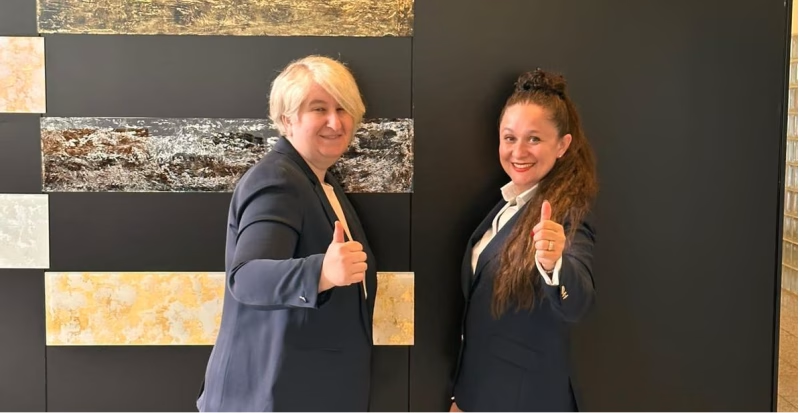





Meet Jim Nigg, a visionary engineer and entrepreneur whose career spans over three decades in construction, infrastructure innovation, and clean energy technology. With a foundation built during his time at WADOT and a relentless curiosity for invention, Jim pioneered kinetic energy (KE) technologies aimed at transforming how we harness power from infrastructure like roadways and sidewalks. As the founder of a startup advancing energy harvesting systems, Jim combines hands-on engineering experience with a futurist mindset, often operating ahead of current market trends. His work has earned federal recognition, multiple patents, and global attention. In this interview, Jim shares insights on innovation, resilience, and what it takes to drive disruptive technology forward against the odds.
Can you describe your entrepreneurial journey and the motivation behind starting your business?
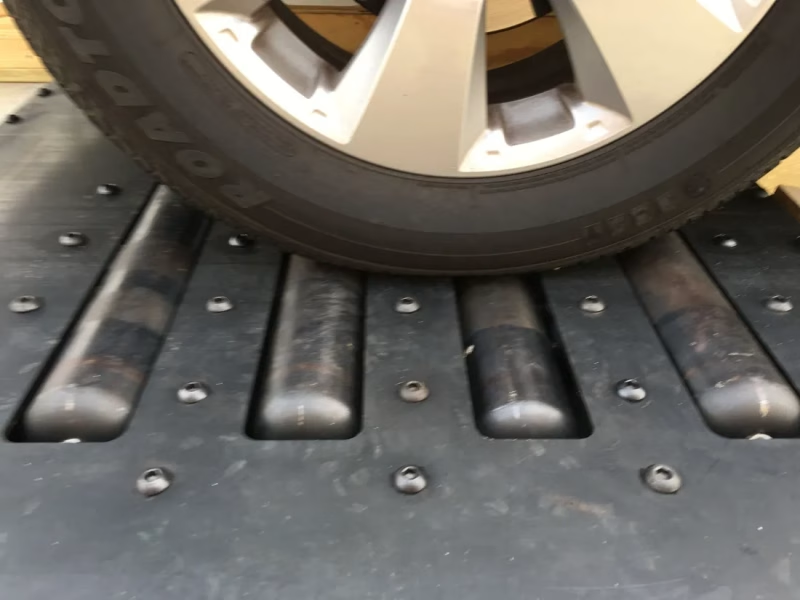
Coming up through the ranks of engineering and construction in the early 90’s I was a voracious reader and at the time was finishing reading the entire encyclopedia set of Science and Invention in my spare time. Working for the WADOT at the time I had completed managed a new type of bridge joint (EPDM – still used today) and after 6 months of installation my boss sent me out to assess the bridge joint performance, particularly the high traffic volume bridges near SeaTac Airport. After reviewing details such as chemical resistance, cracks, expansion and contraction and a host of other items, while standing on the road shoulder looking at the energy the joint was absorbing while traffic was hammering on this joint…all I could think of was “look how much energy these joints are taking and what if we could harness just a small fraction of this energy and put it back into the grid?”
While I did some preliminary engineering on what this energy harvesting system could look like, the technology of the time was not in place and the cost of electricity at that time was less then 2 cents a KWH, so I shelfed the idea.
How do you stay ahead of technological advancements in your industry, and how has this impacted your business model?
My challenge has always been that I am too far ahead of industry, meaning more difficult to find funding for systems or products that don’t exist today since there is no “comparable” or competitive technology for banking and finance to statistically judge risk and reward for investment or capital requirements. Noting MOST funding mechanisms are centered around 2 college students working in a college dorm developing a new app or code and now AI algorythmns.
Depending on the investment and relationship, I am eager to introduce (and further patents) Wave, Sidewalks and Rail as the next KE applications we’ll see around the Globe. The question is where do these technologies launch and that answer is always about the capital to achieve scaling plans.
What role does artificial intelligence play in your current operations or future plans?
Significant, as we look ahead our technology will be applied initially for clean energy, power storage, grid resiliency and electrifying roadways, however the data and information value will exceed the value of the electricity functions within 3-5 years (dependant on capital) and will usher in a new era of traffic control, improved flows, reduced congestion, increased commnications and safety for the traveling public.
Can you share a significant challenge you’ve faced in your business and how you overcame it?
Lack of funding is by far the biggest issue. Banking and finance and government grants are almost non-existent for anything truly novel, if no precedent no one is willing to risk. I overcame this by self-funding and of course, small seed capital where loans/investors are willing to pay for something specific, usually materials only.
How do you approach strategic planning and decision-making in your organization?
I seem to be so far ahead of where this Kinetic Energy (KE) will go, that I receive calls from around the World from other inventors who state “You are WAY ahead of us, how did you do this or that?” So for me and our tech, it’s been more of a challenge financially, politically and industry since any technology truly disruptive, meaning to take a market share of existing, is a bad term and met with push back, shut out and legal challenges.
More specifically, the key is to think through all of the possible scenarios and “map” out the optimum direction and ALWAYS be prepared to pivot to another path to achieve milestone goals.
What is your approach to leadership and fostering a positive company culture?
I have over 35 years leading eningeering firms and construction personnel on large projects and what I learned is what motivates people varies. From money, titles, authority, better offices, paid leave, holidays, flexible schedules, recognition, perks such as a company vehicle and especially involvement in decisions, information sharing and flow and still others. The key is to identify this for each individual an provide where able, usually these personnel can be grouped. Most employers don’t know or forget the best and “cheapest” way to retain and attract the best employees is recognition and involvement…almost everyone has pride in their work and rewarding these efforts this makes the real performers, perform better.
How do you ensure your business remains adaptable and responsive to market changes?
For our tech start up the easy answer is to stay ahead of competition as we’re introducing a new market product, however the logical path is that we will be absorbed by a large orgabnization with either the Capital, existing infrastructure (ie engineering construction or manufacturing) and Global reach since scaling this technology to maintain and control the industry is paramount to dominate and realize a Billion dollar value in less than 10 years.
Can you discuss a recent innovation or project that has been particularly successful for your company?
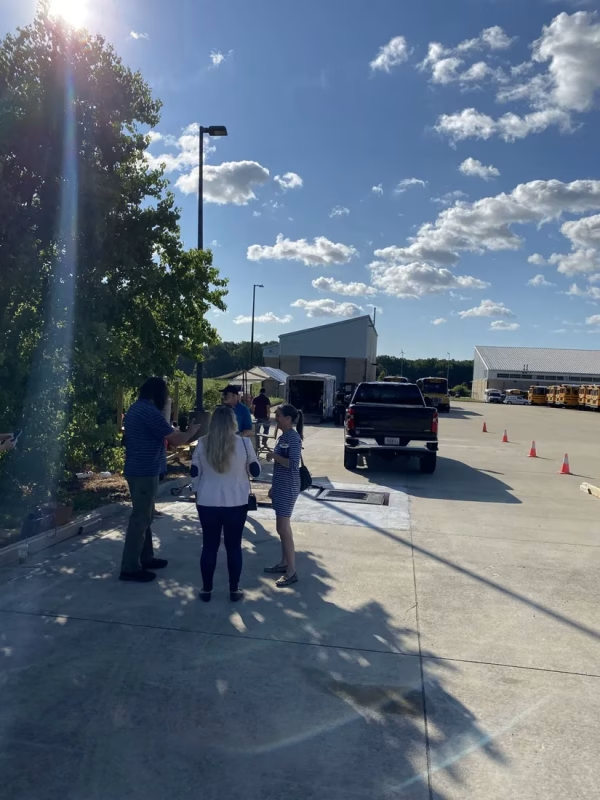
There are many, however the stand out is that under Trump #45 we received a $260,000 dollar grant to demonstrate our KE Roadway System WITH 1 second data readouts, so achieving a data milestone of power produced and storage and fed was a substantial achievement and proves the viability and scalability of the KE technology. While we moved into capitalization after that, Biden administration effectively shut me down with an SEC subpeona that prohibited accepting funds until conclusion…that last almost 2 years and killed our traction and my morale, so I shelfed it and went back to employment work.
What are your long-term goals for your business, and how are you working towards achieving them?
We simply need the capital to get this tech to markets, build out and stabalize our business foundation and begin to scale. Sales is simply waiting on product and capital backing for long term O&M lease agreements. To achieve these goals and now that President Trump #47 is back in office, I’ve resurected the technology and beginning to gain traction again.
While our achievements are significant on a nearly non-existent budget, our lack of marketing and media has proven to be the major hinderance to progress after no capital.
What advice would you give to emerging entrepreneurs in your industry?
Answering this question could make an entire novel. Make sure what you’re doing is a goal of passion and selfless efforts, because ultimately no bank, no financiers and no investor cares unless there are profit margins involved. Government is key because due to these facts and MUST be the real driver to promote technologies that are for the betterment of society. In the US, our systems are fraught with pitfalls and politics making the difficult almost imposisble to navigate…so be prepared to use your own funds, drain your friends and family to make it happen and sacrifice your time, wealth and pride to achieve goals. Also, try to partner with someone who is as passsionate about the tech or project or business as you are, because doing it alone is the toughest path to climb.


