









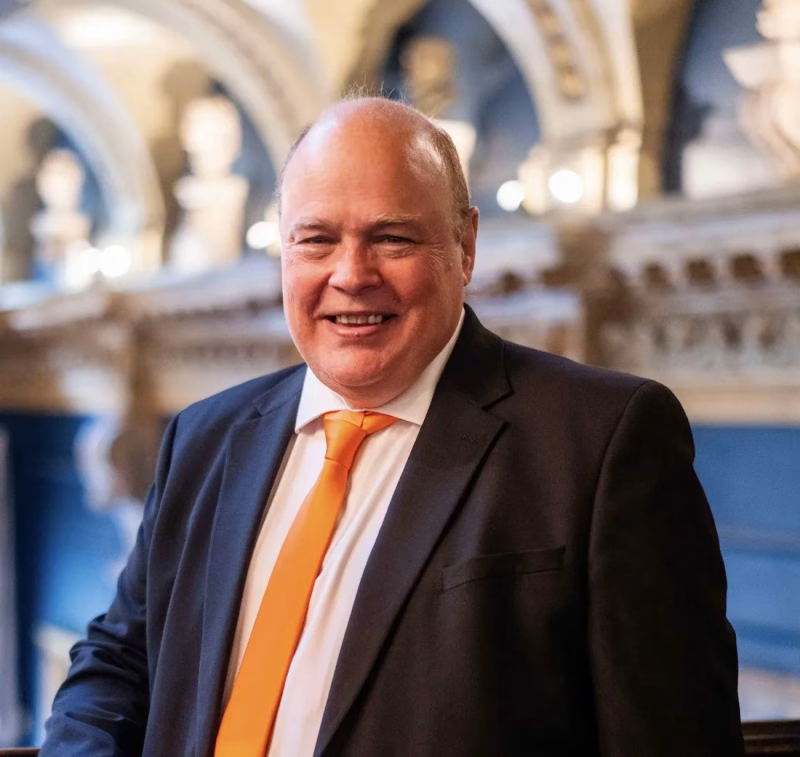
With the smart building sector accelerating across the Middle East and beyond, we sat down with Jeremy Kemp, Managing Director of Vanti, a UK-based leader in intelligent environments, to explore how integrated technology, sustainable design, and user-first thinking are reshaping the future of workplaces and commercial real estate. From product innovation to agile leadership, Jeremy shares how Vanti is helping global organisations deliver spaces that are as smart as they are human.
Can you describe your entrepreneurial journey and the motivation behind starting your business?
My journey has been rooted in a passion for connecting people, places, and technology in ways that truly enhance the built environment. When we established what is now Vanti, we saw a fragmented industry — one where the promise of smart buildings was often lost in a sea of complexity and siloed systems. We set out to become the integrator of choice, delivering intelligent, sustainable environments designed entirely around the people who use them. By bringing together digital systems, user experience design, and robust engineering, we set out to redefine what buildings could be, not just places to exist, but spaces that work for the people inside them.
How do you stay ahead of technological advancements in your industry and how has this impacted your business model?
Staying ahead means staying curious. We’ve built a culture of constant learning, investing heavily in R&D, strategic partnerships, and open dialogue with innovators across the globe. Our business model has evolved from being a traditional systems integrator to becoming a platform-led solutions provider. We now offer advisory, design, build, and operate services, underpinned by proprietary products such as Smart Core and ecoDriver, enabling us to deliver measurable value throughout the lifecycle of a building.
What role does artificial intelligence play in your current operations or future plans?
AI is transforming how we design and deliver spaces, from predictive maintenance to real-time personalisation. Today, we use machine learning and AI-driven analytics to optimise energy use, automate building management, and enhance occupant experiences. In the future, we see AI helping clients model predictive maintenance, improve space utilisation, and even inform real estate investment decisions. AI will be central to our mission to create buildings that are not only intelligent but also intuitive.
Can you share a significant challenge you’ve faced in your business and how you overcame it?
One of our biggest challenges came during our rapid scale-up phase. Balancing growth with culture, quality, and financial sustainability required a fundamental reorganisation of how we worked. We overcame it by embracing transparency and collaborative planning. We restructured our leadership, invested in scalable systems, and made a conscious shift to productise our services. That transformation set us up for the sustainable, global growth we’re now pursuing.
How do you approach strategic planning and decision-making in your organization?
Our strategy is built on systems thinking because in smart buildings, nothing exists in isolation. Our strategic planning involves cross-functional input, data-led scenario modelling, and values-based prioritisation. Being part of the Built Cybernetics Plc group also gives us the flexibility of a startup with the resilience of a publicly listed company. We align every major decision with our core purpose: to improve people’s lives through intelligent environments.
What is your approach to leadership and fostering a positive company culture?
Leadership at Vanti is about empowerment, not control. We operate with trust, transparency, and a commitment to continuous feedback. Tools like Friday Pulse help us measure team well-being, and we embed our values — innovation, integrity, respect, mastery, and passion — in everything we do. I believe culture is the differentiator, especially in technology-led industries. A great culture doesn’t just attract talent; it retains and grows it.
How do you ensure your business remains adaptable and responsive to market changes?
Adaptability is baked into our structure. We use agile methodologies not just in our projects, but across the organisation. Our teams work in pods that can scale or pivot quickly. We also maintain a close dialogue with clients and monitor market signals to proactively adjust offerings. Recent shifts in ESG priorities, for example, accelerated our investment in carbon intelligence and smart energy services.
Can you discuss a recent innovation or project that has been particularly successful for your company?
Our work on ecoDriver has been a game-changer. It’s an energy and carbon optimisation platform that empowers building owners and occupiers to take real-time, informed action on energy use. We recently deployed it across a multi-site commercial portfolio, achieving energy savings of over 30%. What’s powerful is not just the technology, but how we’ve integrated it into the design and operation of spaces to support sustainability targets and user well-being.

What are your long-term goals for your business, and how are you working towards achieving them?
At Vanti, we’re already leading the way in building intelligence, and now, we’re focused on scaling that impact globally. Our goal is to bring seamless, people-focused experiences to more spaces, including in Southeast Asia and the Middle East, building on the success we’ve delivered in the UK and Europe. That means expanding our presence, growing our team, and evolving our technology and services to meet the needs of diverse environments. Whether it’s through innovation, collaboration, or acquisition, everything we do is aimed at delivering meaningful outcomes for people, buildings, and the planet.
What advice would you give to emerging entrepreneurs in your industry?
Focus on solving real problems, not just building clever tech. Be obsessive about user experience, and surround yourself with people who challenge your thinking. This industry needs collaboration, not ego. Most of all, build a company you’d be proud to work for — your people and your culture are your greatest assets.

